In the secular world, Christians are typically known for what we don't do with our bodies, particularly in regards to sex (which is a convoluted issue anyway). But what about food? What about exercise? We look to the bible as the word of God, we look to Jesus as our ultimate model and his followers as forefathers and mothers in the faith. What did they do?
When I first started thinking about losing weight I spent time mulling over the theology of it and praying about the matter. I wanted to make sure I was doing it as a form of honoring God and not myself. The physical reward of losing weight often feeds a kind of self love that is not remotely helpful and more often sinful ie "It was MY good works that got me into shape." I was well aware that here in Western culture, exercise and food can become a religion (and for a lot of people it is) and the gym is often the church of a different kind of disciple. Don't get me wrong, Im not saying Im perfect with this for gyms are bad (they're not), Im just letting you know that theres a flip side and to consider this before jumping in. I did not want my efforts to be more healthy become a higher priority than my relationship with Jesus.
Things I prayed about for myself:
- That I would have a deeper understanding of the worth of my physical body, in Christ sacrificing his. (1 Cor 6:20)
- That my body was made by God, that by being born again now houses the Holy Spirit and as a result belongs to God and not myself. (Psa 139:13, 1 Cor 6:19).
- That I would grow in the fruit of the Spirit, in particular, self control when it came to what I put in my mouth. (Gal 5:22)
- That I would not be controlled by legalism in regards to food/drink. (Matt 23:23, Rom 14:3).
- That my eating or drinking would not cause anyone to stumble in their faith or be discouraged. (1 Cor 8:9).
- That in my eating/drinking, I would be a role model to others. (Prov 31:11, 1 Tim 3:11, 4:12, Titus 2:3).
- That my eating and drinking, would be for the glory of God. (1 Cor 10:31)
- That I would acknowledge and participate in joyful Christ centred feasting as well as fasting (and that any fasting would be not remotely with the intention of weight loss). (Luke 9:16-17, Ecc 3:13, Neh 8:10, Matt 4:2, Luke 5:33-34).


"Discipline, for a Christian, begins with the body. We have only one. It is this body that is the primary material given to us for sacrifice. If we didn't have this, we wouldn't have anything. We are meant to present it, offer it up, give it unconditionally to God for his purposes."
"More spiritual failure is due, I believe, to this cause than any other: the failure to recognise this living body as having anything to do with worship or holy sacrifice. This body is, quite simply, the starting place. Failure here is failure everywhere else."
"It is significant that only 10% of our nation's top executives are overweight. This seems to me to indicate that few men who have not succeeded in curbing the appetite will make it to the top. Physical restraint is basic to power. They do it for power in this world. We do it for power in another."
"Gluttony, one of the more obvious modern sins, is generally tacitly accepted. Little is said about it from the pulpit. It is too embarrassing; it gets down too close to where the people, including the preacher, live. No one who is overweight dares preach about it - he has no room to talk... While a very small percentage of people are overweight for physiological reasons, the vast majority simply eat too much of the wrong things."
"Many a Christian has found the hardly hoped for strength of the Lord when bringing to Him some very real, very difficult physical need. If weight has literally become a 'burden', why should we not bring it to the Lord and ask his help in overcoming it? Can my will not cooperate with His in this matter as in spiritual matters?"
Shes very blunt, and the book is a bit old school and some comments of hers may raise a few eyebrows but I think think its a good read. I appreciate authors who annoy me at least a little bit because their comments make me think hard. For me personally, her tone really helped me a ton. Maybe its because of my blunt personality, but soft, buttery, faux encouraging hyper spiritual "you're a snowflake" type words, honestly they make me yawn. I feel Westerners for the most part are addicted to pithy encouragement to the point, that it often now does nothing to us changing our habits. There are times when encouraging words are needed and there are times when hard convicting words are needed. When it comes to Elizabeth Elliot, if you don't want to be convicted, don't read her books.
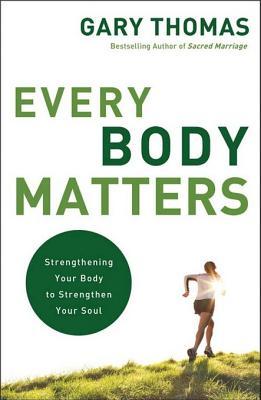 There's another book in particular I hope to obtain and read at some point, and perhaps share in the future: 'Every body matters' by Gary Thomas. He's the author who wrote the well known marriage book 'Sacred Marriage.' Clink on the link and have a read of the blurb on Amazon. He does an excellent job of connecting and discussing how we use our bodies (in particular getting fit and healthy) with scripture. I think its cool that hes also teaching pastor who also runs marathons. Heres a great video of one of his talks:
I'd like to finish this post with some basic points. If you're a Christian, please don't think of your health, your food, your body as separate from your worship. If you're not a Christian, or not spiritually minded for that matter, please at least consider your physical health along side your emotional and mental health. Everyone knows that good physical health (biochemically and neurologically speaking) is correlated with good mental health. Take a pointer from my favorite blonde lawyer:


No comments:
Post a Comment